
Healing From a Narcissistic Relationship
When Love Leaves You Doubting Yourself: Narcissistic relationships don’t just hurt — they can shake your sense of self, safety, and what love should feel like. We are a group of NYC therapists that specialize in healing from narcissistic relationships.
Therapy for Survivors of Narcissistic Romantic Relationships | NYC Relationship Trauma Help
If you were in a romantic relationship with someone whose patterns were controlling, dismissive, manipulative, or emotionally invalidating — and you’re now left questioning your worth, your judgment, or your ability to trust again — you’re not alone. Many people leave narcissistic relationships feeling confused, ashamed, or unsure whether what they experienced was “that bad.” Narcissistic dynamics are often subtle at first — and deeply destabilizing over time. Healing is possible, and it begins with understanding the impact this kind of connection had on you — and rebuilding a sense of self that wasn’t defined by someone else’s needs.
Signs You Were in a Narcissistic Relationship
You were loving, present, and giving — but it never felt like enough.
On paper, everything looked fine… but inside, you felt tense, anxious, “on guard,” or small.
You felt intensely drawn to your partner early on, followed by periods of emotional distance or withdrawal.
Your feelings, needs, or concerns were minimized, dismissed, or turned back on you.
You were frequently blamed for problems — even when you tried to communicate calmly.
You began questioning your memory, perception, or emotional reactions.
Apologies were rare, shallow, or followed by repeated hurtful behavior.
You felt responsible for maintaining harmony, even at the expense of your own needs.
Setting boundaries led to guilt, anger, or punishment rather than understanding.
You felt more anxious, insecure, or emotionally depleted as the relationship continued.
You stayed longer than you wanted to because leaving felt overwhelming or confusing.
Even after the relationship ended, you found yourself replaying conversations or missing them despite the pain.
These experiences often point to narcissistic relational patterns, not personal weakness or failure. Many people in these relationships are deeply empathetic, loyal, and emotionally aware — qualities that can be eroded in unhealthy dynamics.
Therapy helps you make sense of what happened without blaming yourself.

Why Narcissistic Relationships Leave Deep Marks
Relationships with narcissistic partners are often high in intensity, inconsistency, and invalidation. Those same patterns that felt addictive — the highs, the charm, the attention — are the very things that can create trauma bonds: emotional attachment that sticks long after the person is gone. You might feel pulled back mentally or emotionally, even after the breakup. Those conflicting feelings can make you feel ashamed and guilty…..maybe you’re telling your “I should have known better.” The confusion will make you wonder if the relationship was real…”did they even love me?” And unfortunately that question will make you doubt your worth or ability to attract healthy love in the future. It’s a nasty spiral to fall into but our NYC narcissistic abuse specialists can help you through this healing process.
These aren’t character flaws — they’re survival responses to repeated hurt and inconsistency.
Healing From a Narcissist Is Possible
If you’re carrying self-doubt, emotional exhaustion, or lingering attachment after a narcissistic relationship, therapy can help you reconnect with your sense of self. You don’t need to have all the answers — just a willingness to start healing.
-
Learn why this type of attachment feels so sticky and how to loosen its grip.
-
What made their behavior harmful, and what made you vulnerable to it. Therapy helps you understand these patterns and build relationships that feel mutual, safe, and emotionally satisfying.
-
When your feelings were minimized or dismissed, you learned to ignore them. Therapy helps you safely reconnect with your emotional experience, trust your instincts again, and recognize your needs without guilt or self-doubt.
-
Setting boundaries may feel selfish or dangerous. Therapy helps you develop clear, compassionate boundaries—and tolerate the discomfort that comes with honoring yourself.
-
Hypervigilance, over-control, and constant “doing” often began as survival strategies. Therapy helps your nervous system learn that it is safe to slow down, rest, and exist without performing.
-
Often a romantic relationship with narcissist isn’t your first exposure to one. Many adult children of narcissistic parents end up dating someone that feels familiar. If this is you, therapy can help you realize that pattern and how to break it.
-
It’s time to learn that your value isn’t tied to someone else’s validation. Therapy supports the development of an authentic sense of self—rooted in choice, values, and emotional truth rather than obligation. Therapy also helps you learn how to build self-compassion.
How Therapy For Narcissistic Relationship Abuse
EMTG Helps
You Deserve Healing — Not Blame
It isn’t your fault that you loved someone who couldn’t love you back in the ways you needed. But the effects of that relationship can echo long after it ends.
Therapeutic Techniques to Heal After Narcissistic Relationship
As therapists who specialize in narcissistic abuse-Our approach is warm, attuned, and tailored to people healing from relational trauma, not just “bad breakups.” We integrate:
Narcissistic Relationship–Informed Therapy
We work from a framework that recognizes how dating a narcissistic partner can slowly erode identity, self-trust, boundaries, and emotional safety. Therapy focuses on helping you untangle from survival patterns that developed within the relationship—such as self-silencing, over-explaining, caretaking, or constant self-monitoring—and rebuild a sense of self that is no longer organized around managing someone else’s reactions or earning approval.
Trauma-Informed, High-Functioning Care
The impact of a narcissistic relationship doesn’t always show up as obvious dysfunction. It often appears as hyper-independence, emotional numbing, overthinking, difficulty trusting yourself, or chronic self-criticism after the relationship ends. Our trauma-informed approach addresses these patterns without pathologizing your strengths, helping your nervous system shift out of vigilance and into a felt sense of emotional safety and stability.
Cognitive and Core Belief Repair
Narcissistic relationships often instill painful beliefs such as “I’m too much,” “My needs cause problems,” “I have to earn love,” or “I can’t trust my own perception.” We use targeted cognitive work to identify and gently loosen these beliefs while integrating emotional processing—so insight becomes lived change, not just intellectual understanding.
Emotion Regulation and Internal Safety
When your feelings were dismissed, minimized, or turned against you, it makes sense that emotions now feel overwhelming or unsafe. Therapy supports you in rebuilding emotional regulation not as a way to control yourself, but as a way to experience emotions with steadiness, self-trust, and compassion—without fear of backlash, shame, or abandonment.Reclaiming Identity and Values After the Relationship
After a narcissistic relationship, many people feel unsure of who they are outside of the dynamic. Therapy supports you in reconnecting with your values, needs, and desires—separate from the role you had to play to survive the relationship. From there, you can begin building a life and relationships guided by self-respect and choice rather than old relational survival rules.
You deserve relationships that feel safe, reciprocal, and respectful — and therapy can help you get there.
About Dr. Shaneze Gayle Smith

I am licensed to provide therapy in NY, NJ and other 41 states and would be honored to support you on your journey towards self-growth and healing.
I work with adults who have been in narcissistic relationships and learned to survive through constant adaptation: staying competent, composed, and emotionally regulated while quietly suppressing their own needs. Many of my clients are high achievers, entrepreneurs, and caregivers who carry significant responsibility and remain outwardly successful, even as their bodies begin to signal distress through chronic stress, burnout, somatic pain, or health issues that don’t fully resolve. I offer a warm, grounded space to explore how relational trauma and toxic work environments reinforce over-functioning, self-doubt, and disconnection from the body. Together, we focus on rebuilding self-trust, softening survival patterns, and developing boundaries that protect your energy—so your life and work are no longer organized around endurance, but around safety, agency, and sustainability.
Education
PhD in Clinical Psychology, Seton Hall University (Health Psychology & Child/Adolescent Focus)
Psychology Residency, Albert Einstein College of Medicine/Montefiore Medical Center
MS in Forensic Psychology, Walden University
Medical School (3 years), Rutgers-New Jersey Medical School
BA in Cell Biology and Neuroscience, Rutgers University
Credentials
Advanced training in Cognitive Behavioral Therapy (CBT), Acceptance and Commitment Therapy (ACT) and Dialectical Behavior Therapy (DBT) .
Trained by experts in narcissistic abuse recovery and trauma-informed therapy for complex family systems
Expertise in mind body connection- chronic health issues stemming from traumatic relationships.
About Vernee Brooks, LPC, LMHC

I am licensed for therapy in New York, New Jersey & Texas.
Healing from a narcissistic relationship can be brutal and deeply disorienting. Many of my clients come to therapy feeling like they were made to believe they were the problem—questioning their judgment, their needs, or their worth. I’m especially passionate about working with creatives, successful professional women, and high-functioning adults who appear confident on the outside, yet struggle with self-doubt, people-pleasing, or repeating painful patterns in dating and relationships.
In our work together, we create a space where you don’t have to over-explain, justify, or minimize what you went through. We’ll explore what the relationship actually cost you, clarify what you want moving forward, and determine what boundaries feel right for you—whether that means no contact, limited contact, or learning how to engage without losing yourself.
My approach is collaborative and practical, while still going deep. We’ll identify relational patterns that no longer serve you, strengthen your sense of self, and rebuild boundaries rooted in self-trust rather than fear. Therapy becomes a place to understand how that relationship shaped the way you attach, set limits, and see yourself—and to gently shift those patterns so you can create relationships and a life that feel more grounded, secure, and aligned with who you truly are now.
Education
M.S. in Clinical Mental Health Counseling, Walden University
BA in Psychology, Rutgers University
Credentials
Advanced training in Cognitive Behavioral Therapy (CBT), Acceptance and Commitment Therapy (ACT) and Dialectical Behavior Therapy (DBT).
Trained by experts in narcissistic abuse recovery and trauma-informed therapy for complex family systems
Expertise in understanding how narcissistic family dynamics impact identity development and self-worth.
Expertise in anxiety and panic attacks stemming from emotional abuse and invalidation, particularly for Black women and BIPOC individuals.
About Christine Pacheco, LMSW
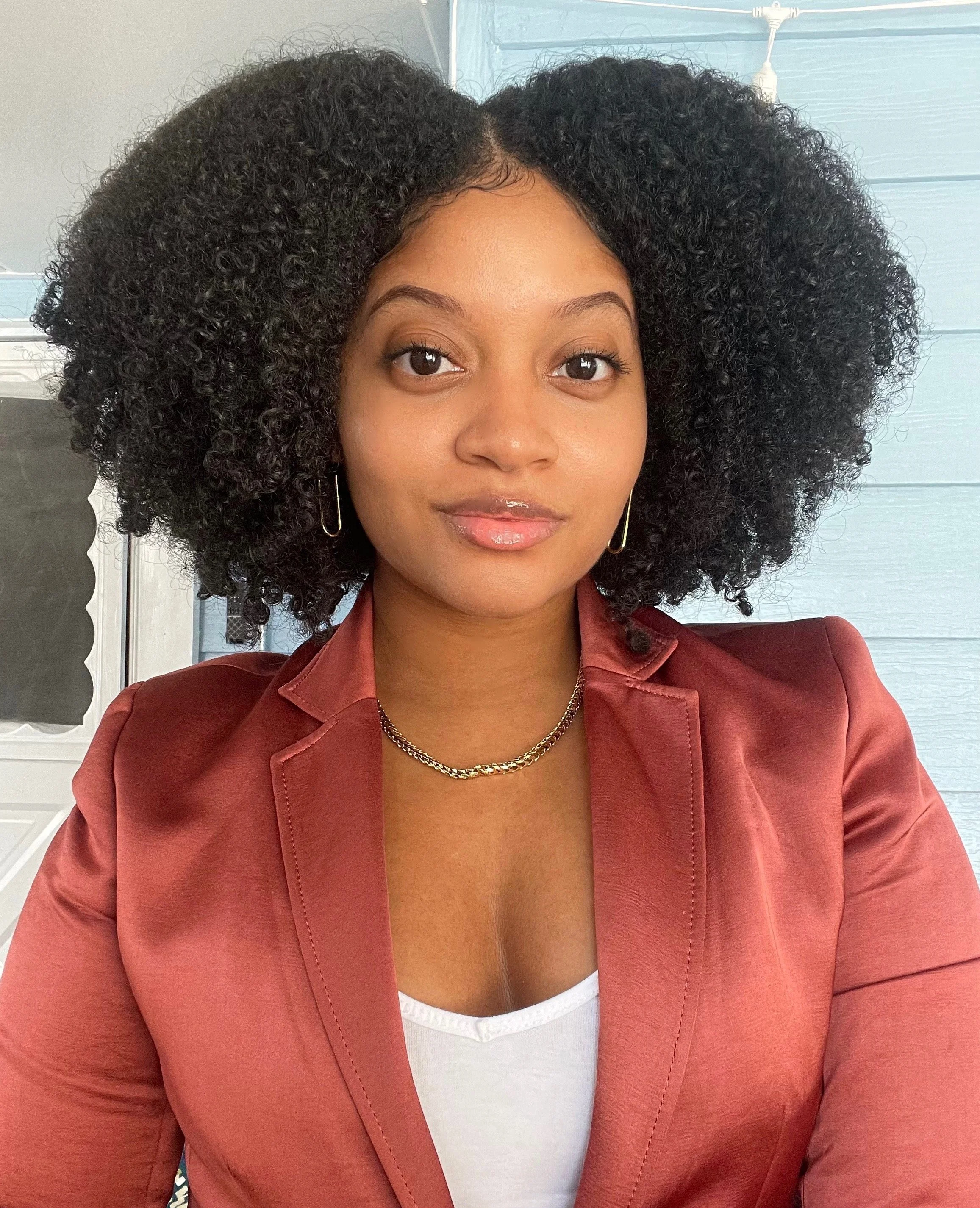
I am licensed for therapy in New York.
I’m especially drawn to working with people who are healing after narcissistic relationships and finding themselves at a crossroads—ready to date again, but unsure how to trust their instincts or show up without losing themselves. Many of my clients are navigating the current dating scene in NYC, which can feel fast-paced, emotionally confusing, and exhausting, especially after a relationship where boundaries were blurred or needs were dismissed. These experiences often reactivate old patterns such as people-pleasing, self-doubt, over-functioning, or the feeling that you have to prove your worth in order to be chosen.
In therapy, we focus on helping you reconnect with your internal sense of safety and clarity so dating and relationships no longer feel like a performance or a test. If you’re ready to create lasting change, we can work together to strengthen boundaries, rebuild self-trust, and help you move toward relationships that feel mutual, grounded, and emotionally available. Let’s begin your journey toward a life and relationships that feel aligned with who you truly are—not shaped by past dynamics or survival patterns.
Education
Master of Social Work, Fordham University
Bachelor of Arts in Psychology, Brooklyn College
Credentials
Advanced training in Cognitive Behavioral Therapy (CBT), Attachment-based therapy, Person-Centered therapy and Dialectical Behavior Therapy (DBT).
Trained by experts in narcissistic abuse recovery and trauma-informed therapy for complex family systems.
Expertise in supporting BIPOC mothers breaking intergenerational cycles of narcissistic abuse, and how abuse impacts relational patterns.
Expertise in emotional dysregulation and healing from chronic invalidation in narcissistic relationships.
No worries- we are also running groups including: 1) ADULT CHILDREN OF NARCISSISTIC PARENTS and 2) SURVIVORS OF NARCISSISTIC RELATIONSHIPS. If interested in either of these groups, fill out form and we can discuss more.
Not Ready For Individual Therapy?
Healing from a Narcissistic Relationship FAQs
-
Many people hesitate to use labels — and that’s okay. What matters more than a diagnosis is how the relationship felt. If you felt consistently dismissed, blamed, confused, anxious, or like you were losing yourself trying to keep the peace, those experiences are worth paying attention to. Therapy focuses less on labeling your partner and more on understanding the emotional impact the relationship had on you.
-
This is extremely common. Narcissistic relationships often create trauma bonds, where cycles of closeness and emotional withdrawal keep your nervous system stuck in longing and self-doubt. Missing someone who hurt you doesn’t mean you made it up or that the relationship was healthy — it means your attachment system is still healing.
-
Not necessarily. Many people who date narcissistic partners are empathetic, loyal, and emotionally attuned. In a healthy relationship, those traits are strengths. In a narcissistic dynamic, they can be exploited. Therapy helps you understand why certain patterns formed without shaming or blaming you.
-
Gaslighting and emotional invalidation can slowly erode your trust in your own perceptions. You might replay conversations, second-guess memories, or wonder if you were “overreacting.” Therapy helps you reconnect with your internal sense of truth and rebuild confidence in your own emotional reality.
-
Some narcissistic relationships involve emotional abuse, while others involve chronic invalidation, manipulation, or control that still leaves lasting harm. You don’t need to decide whether your experience “counts” as abuse to deserve support. If the relationship damaged your self-esteem, sense of safety, or ability to trust, therapy can help.
-
Yes. Therapy helps you explore attachment patterns, boundaries, and early relational experiences that may have made the dynamic feel familiar — without suggesting something is “wrong” with you. The goal isn’t perfection; it’s awareness, choice, and safer relationships moving forward.
-
It’s deeply unsettling when someone rewrites the narrative in a way that leaves you questioning yourself. Therapy provides a grounded, neutral space where your experiences are taken seriously and examined with care — not dismissed or minimized.
-
Not at all. While understanding the relationship can be helpful early on, therapy also focuses on you: your healing, your goals, your boundaries, and the life you want to build now.
-
Healing isn’t linear and there’s no timeline you “should” be on. Many clients notice relief once they understand what happened and why it affected them so deeply. Therapy helps move you from self-blame and rumination toward clarity, self-trust, and emotional freedom.