
Therapy For Childhood Trauma
What happened to you was real. And it followed you here — into your relationships, your patterns, the way you talk to yourself when no one's listening. You've probably spent years managing it. Being functional. Being fine. Doing everything right on the outside while something quieter runs underneath — shaping what you expect from people, how safe you let yourself feel, how much of yourself you actually let in. But managing isn't the same as getting free of it. That's what this work is for.
Childhood trauma doesn’t stay in childhood.
You may look successful on the outside, but inside you struggle with anxiety, self-doubt, people-pleasing, perfectionism, or relationships that never seem to feel secure. You may find yourself constantly worried about being abandoned, feeling responsible for other people’s emotions, or questioning whether you’re “too much” or “not enough.”
The truth is that childhood trauma often shapes how we see ourselves, others, and the world long after childhood has ended.
At Empowered Mind Therapy, we specialize in helping adults heal the lasting effects of childhood trauma and attachment wounds so they can develop healthier relationships, stronger boundaries, greater self-worth, and a deeper sense of emotional security.
Sounds Familiar?
Many survivors of childhood trauma don’t realize their current struggles are connected to early experiences
You may experience:
Difficulty trusting others
Fear of abandonment or rejection
Chronic anxiety or hypervigilance
People-pleasing and difficulty setting boundaries
Perfectionism and self-criticism
Emotional overwhelm or emotional numbness
Difficulty identifying your own needs
Choosing emotionally unavailable or unhealthy partners
Feeling responsible for other people’s emotions
Low self-worth despite external success
Conflict avoidance
Difficulty feeling safe in relationships
If these patterns sound familiar, you’re not alone. These responses often develop as adaptations to environments where emotional safety, consistency, or support were lacking.

Your Childhood Created The Problems You’re Facing Today
Childhood trauma doesn't always look like what people imagine. It isn't always a single event or an obvious crisis. Sometimes it's the accumulation of years — of feeling unsafe, unseen, or like too much. Of growing up in an environment that couldn't consistently meet your emotional needs, whatever form that took.
What it leaves behind is subtler than people expect. You learned to read rooms before you learned to read people. You developed a relationship with anxiety that feels so familiar it barely registers as anxiety anymore. You became attuned to everyone else's emotional state while quietly losing track of your own. You got very good at functioning — and function became the thing you hid behind.
These weren't character flaws developing. They were adaptations. Intelligent, necessary responses to an environment that required them. The problem is that adaptations don't automatically retire when the environment changes. They follow you into your adult relationships, your work, your sense of what you deserve and what you're allowed to feel.
Many adults carrying unresolved childhood experiences were never given permission to simply be — uncertain, needy, or overwhelmed — without consequence. So they learned to manage instead. To contain. To handle it. To be the strong one, the capable one, the one who doesn't make it harder for everyone else.
What gets left behind in all of that managing is yourself. The parts that needed tending. The emotions that never got processed. The grief that never had anywhere to go.
Therapy offers a space where none of that has to be managed anymore. Where your experience can be met with consistency and honesty rather than judgment or agenda. Where you can begin to understand not just what happened, but what it taught you to believe — about safety, about relationships, about your own worth. And where, gradually, those beliefs can be examined, challenged, and replaced with something that actually serves the life you're trying to live.
How Therapy For Childhood Trauma Works
-
You already know something is off. What therapy gives you is the deeper layer — why you react the way you do, where the pattern actually started, and what it's been protecting you from. That level of understanding changes everything because it replaces self-blame with clarity.
-
The people you're drawn to, the dynamics you recreate, the point at which you always pull back or push too hard — these aren't random. Therapy helps you see the relational blueprint you're working from and gives you the tools to actually rewrite it.
-
The disproportionate anger. The sudden shutdown. The wave of anxiety in a situation that should feel safe. These reactions make sense once you understand their origin. Therapy gets you to a place where you can see them coming — and eventually, where they stop running the show.
-
If feeling things was dangerous growing up, you learned to suppress, override, or intellectualize your emotional experience. Therapy helps you rebuild a relationship with your inner life — one where emotions become information rather than threats to be managed.
-
That voice that tells you you're too much, not enough, lucky to have what you have — it didn't originate with you. Therapy traces it to its source and systematically weakens its grip, not through positive affirmations but through real, sustained work on the beliefs underneath it
-
Hypervigilance inside relationships — scanning for signs of abandonment, misreading neutral moments as threats, sabotaging things when they feel too good — is one of the most painful legacies of an unsafe childhood. Therapy builds the internal security that makes genuine closeness possible
-
When you grew up needing to be agreeable, impressive, or invisible to stay safe, performance becomes a survival strategy. Therapy creates a space where none of that is required — and that experience gradually generalizes into the rest of your life.
-
Unresolved trauma lives in the nervous system, not just in memory. The chronic tension, the exhaustion, the feeling of being perpetually braced for something — therapy works at the level where these patterns are actually stored, not just where they're consciously understood.
-
A lot of adult pain is unprocessed grief for a childhood that should have been different. Until that grief has somewhere to go, it drives behavior — in relationships, in work, in the relentless pursuit of something that never quite satisfies. Therapy gives it somewhere to go.
-
When your sense of self was shaped by what others needed you to be, it's hard to know who you actually are beneath all of it. This is the most fundamental work therapy does — helping you discover, and then trust, a self that isn't organized around survival, approval, or other people's comfort.
Therapeutic Techniques We’ll
Use in Therapy
As therapists who specialize in working with high-functioning adults carrying unresolved childhood trauma, we understand how early experiences — of feeling unsafe, unseen, or emotionally alone — shape the way you see yourself and move through the world. Our approach is intentional, depth-oriented, and designed for people who are functioning well on the outside while privately carrying the weight of what wasn't resolved.
Trauma-Informed, High-Functioning Care
Your trauma may not look like crisis or dysfunction. It shows up as hyper-independence, chronic overthinking, emotional detachment, difficulty trusting people, or a relentless inner critic that no amount of achievement quiets. Our trauma-informed approach addresses these patterns without pathologizing your success — helping your nervous system move out of a state of constant alertness and into a genuine felt sense of safety.Core Belief and Cognitive Work
Childhood experiences leave behind more than memories. They leave conclusions — about your worth, your needs, your right to take up space. Beliefs like "I'm only valuable when I'm useful," "My needs are too much," or "Something is fundamentally wrong with me." We use targeted cognitive work to identify and loosen these beliefs while integrating emotional processing — so that change happens at more than an intellectual level.Emotion Regulation and Internal Safety
When emotions were met with dismissal, unpredictability, or punishment, you learned to suppress or override them. Therapy helps you develop a different relationship with your emotional experience — not as something to manage or contain, but as information you can finally afford to feel without fear, shame, or overwhelm.Identity Work Beyond Survival
When your early environment required you to be agreeable, capable, or self-sufficient above all else, your identity can become organized around those demands rather than around who you actually are. Using a values-based approach, therapy supports you in clarifying what genuinely matters to you — and building a sense of self that is no longer defined by old survival rules or the need for external validation.Relational and Attachment-Focused Work
Childhood experiences don't stay in the past — they show up in how you attach, how much closeness you allow, how quickly you brace for disappointment, and how difficult it can be to ask for what you need. We work relationally, using the therapeutic relationship itself as a space to experience something different — consistency, honesty, and genuine attunement — often for the first time.
At its core, this work is about creating an internal experience that feels calmer, more grounded, and more your own. A space where you can stop performing, start trusting yourself, and begin to address the long-term effects of what you carried out of childhood — and have been carrying ever since.
About Dr. Shaneze Gayle Smith

I am licensed to provide therapy in 41 states and would be honored to support you on your journey towards self-growth and healing.
As the eldest child in my family, I know firsthand what it means to grow up feeling responsible for everything and everyone — while your own needs quietly moved to the back of the line. I work with adults who learned early that being capable, strong, and self-sufficient was the safest way to exist. Many of my clients are entrepreneurs, high achievers, and mothers who carry enormous responsibility, and whose bodies have started to signal — through chronic stress, somatic pain, or health issues that don't fully resolve — that something deeper needs attention.
I offer a warm, grounded space where we explore how early emotional experiences show up in both the mind and the body. Together we work on reconnecting with yourself, softening the survival patterns that once protected you, and building boundaries that actually preserve your energy rather than deplete it. For clients who are parents, this work also becomes a place to consciously parent differently — with more presence, attunement, and self-trust — rather than from exhaustion or fear.
Education
PhD in Clinical Psychology, Seton Hall University (Health Psychology & Child/Adolescent Focus)
Psychology Residency, Albert Einstein College of Medicine/Montefiore Medical Center
MS in Forensic Psychology, Walden University
Medical School (3 years), Rutgers-New Jersey Medical School
BA in Cell Biology and Neuroscience, Rutgers University
Credentials
Advanced training in Cognitive Behavioral Therapy (CBT), Acceptance and Commitment Therapy (ACT) and Dialectical Behavior Therapy (DBT)
Trained by leading experts in trauma-informed therapy and the treatment of complex childhood trauma
Specialized expertise in the mind-body connection — particularly chronic health conditions and somatic symptoms rooted in early emotional experiences
About Vernee Brooks, LPC, LMHC

I am licensed for therapy in New York, New Jersey & Texas.
Healing from narcissists can be brutal. As a child to both parents being narcissists, I was constantly being told I was the problem. I am passionate about helping clients who are creatives, successful professional women, or high-functioning adults who look confident on the outside but struggle with self-doubt, people-pleasing, or repeating painful patterns in dating and relationships. In our work together, we’ll create a space where you don’t have to over-explain or minimize your experiences. We will figure out whether you want to go no contact or what you want relationship to look like.
My approach is collaborative and practical, while still going deep. We’ll look at patterns that no longer serve you, build healthier boundaries, and help you navigate life with more clarity and confidence. Therapy becomes a place to understand how your upbringing shaped the way you love, set boundaries, and see yourself—and to gently shift those patterns so you can create relationships and a life that feel more authentic, secure, and fulfilling.
Education
M.S. in Clinical Mental Health Counseling, Walden University
BA in Psychology, Rutgers University
Credentials
Advanced training in Cognitive Behavioral Therapy (CBT), Acceptance and Commitment Therapy (ACT) and Dialectical Behavior Therapy (DBT)
Trained by leading experts in trauma-informed therapy and the treatment of complex childhood trauma
Specialized expertise in how early childhood experiences shape identity development and self-worth in adulthood
Specialized expertise in anxiety and panic rooted in childhood emotional invalidation, with particular experience working with Black women and BIPOC individuals
About Christine Pacheco, LMSW
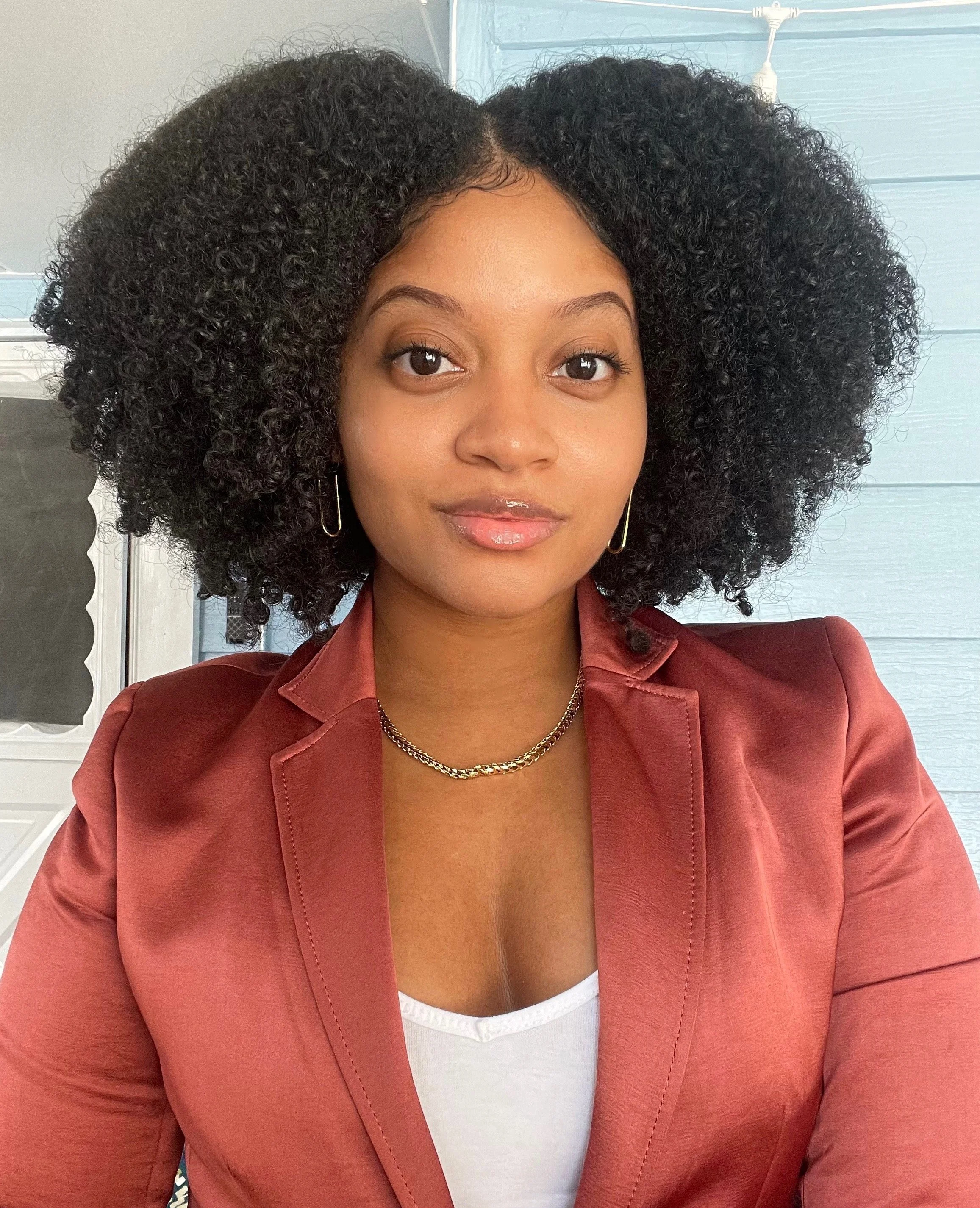
I am licensed for therapy in New York.
As someone who has done the work to break generational cycles, I’m passionate about helping others heal from childhood trauma and create lasting change. I’m especially drawn to working with cycle-breakers navigating major life transitions—whether you're stepping into adulthood, becoming a parent, redefining your career, or learning to build healthier relationships. Together, we’ll explore how childhood experiences may have shaped patterns like perfectionism, self-doubt, difficulty trusting others, or feeling like you have to earn love and acceptance. Therapy is a collaborative process where we’ll work together to understand your story, build on your strengths, and help you create a life that feels more authentic, connected, and emotionally safe.
I also have a special passion for supporting mothers who are committed to parenting differently than they were parented. Parenting often brings old wounds to the surface, and healing those wounds can help you create the secure, emotionally safe childhood you always wanted for your own children. I also enjoy working with single mothers navigating dating and healthy relationships, helping them recognize red flags, build secure connections, and choose partners who align with the life and family they’re working so hard to create. If you're ready to break old patterns and build healthier relationships—with yourself, your children, and others—I would be honored to support you on that journey.
Education
Master of Social Work, Fordham University
Bachelor of Arts in Psychology, Brooklyn College
Credentials
Advanced training in Cognitive Behavioral Therapy (CBT), Attachment-Based Therapy, Person-Centered Therapy and Dialectical Behavior Therapy (DBT)
Trained by leading experts in trauma-informed therapy and the treatment of complex childhood trauma
Specialized expertise in supporting BIPOC mothers in breaking intergenerational trauma cycles and understanding how early experiences shape adult relational patterns
Specialized expertise in emotional dysregulation and the long-term effects of chronic invalidation during childhood
Therapy For Childhood Trauma FAQs
-
Most people who come to us have already tried therapy — sometimes more than once. General therapy can be genuinely useful, but it often works at the level of symptoms: managing anxiety, improving communication, building coping skills. What it frequently misses is the root. When the underlying experiences that generated those symptoms haven't been directly addressed, the relief tends to be temporary. Our work is specifically focused on what happened early, how it shaped the way you think, feel, and relate, and what needs to shift at that level for the changes to actually hold
-
This is one of the most common things we hear — and it's worth taking seriously. Childhood trauma doesn't require a single catastrophic event. It can be the accumulation of years of feeling unseen, emotionally alone, or like your needs were an inconvenience. Many of the adults we work with grew up in homes that looked functional from the outside. If the patterns are showing up in your adult life — in your relationships, your self-worth, the way you talk to yourself — that's what matters. The threshold for deserving support isn't how bad it looks on paper. It's whether it's affecting your life now.
-
This is a fair question and one we answer honestly: this kind of work takes time. If your patterns have been in place since childhood, they won't resolve in eight sessions. Most clients begin noticing meaningful shifts within the first few months — in how they respond to situations, how they relate to people, how they feel internally. Deeper structural change typically unfolds over a longer period. What we can tell you is that the work is cumulative. Each session builds on the last, and the changes that come from addressing the root tend to be durable in a way that symptom management rarely is.
-
That discomfort makes complete sense — and it's often directly connected to what brings people here in the first place. Growing up in an environment where vulnerability had consequences teaches you to be careful about who you let in. You won't be asked to open up before you're ready. The early work is about building the kind of trust that makes the deeper work feel possible — and that happens at your pace, not ours. Many of our clients describe themselves as private people. Most of them are surprised by how the process unfolds when the space is genuinely safe.