
Therapy For Dating & Relationships
You keep having the same relationship, just with different people. Different face, same ending. You know the pattern — you just don't know how to stop being in it. The overthinking, the settling, the bracing for things to fall apart right when they start going well — none of that is random, and none of it is who you are. It's learned. Which means it can be unlearned. That's the work.
You don't have to keep repeating the same relationship patterns.
Maybe you keep finding yourself in relationships that feel familiar—but not necessarily healthy.
You may be drawn to people who are emotionally unavailable, inconsistent, or difficult to connect with. You may find yourself overthinking texts, questioning where you stand, giving more than you're receiving, or staying in relationships long after you know something isn't right.
Or maybe you're exhausted by dating altogether.
You want a healthy relationship, but you're not sure how to get there without losing yourself in the process.
At Empowered Mind, we help individuals understand the patterns that shape their relationships, heal the wounds underneath those patterns, and develop the confidence and self-trust to create healthier connections. Our clinicians have over 20 years of combined clinical experience. We solely work virtually and accept insurance through out-of-network benefits with fees ranging from $200-250, with sliding scale spots available (check benefits here).
You don't have to keep choosing what feels familiar. Therapy can help you learn what feels healthy.
Is this your dating experience?
Dating can be exciting. It can also be emotionally draining.
You may find yourself analyzing every interaction, wondering whether someone is genuinely interested, questioning whether you're asking for too much, or feeling discouraged by the dating process.
You might be experiencing:
Dating Anxiety: You constantly worry about whether someone likes you, whether they're pulling away, or whether the relationship is going to work.
Dating Burnout: You're tired of the apps, the talking stages, the situationships (how did this become a relationship status??!), and the emotional investment that doesn't seem to lead anywhere.
Fear of Rejection or Abandonment: You want connection but find yourself bracing for the moment someone leaves.
Difficulty Trusting: Past relationships may have made it difficult to trust other people—or trust yourself to recognize what's healthy.
Overthinking relationships: You replay conversations, analyze texts, and search for signs that something has changed.
People pleasing: You prioritize your partner's needs and feelings while losing touch with your own.
Difficulty Setting Boundaries: You know what you don't want, but struggle to communicate it or hold the boundary when someone pushes back.
Repeating Relationship Patterns: You keep finding yourself attracted to the same types of people or experiencing the same relationship dynamics.
Difficulty Leaving: Even when you know a relationship isn't healthy, walking away can feel incredibly difficult.
Therapy can help you move from reacting to relationships to understanding them.

Why do I keep ending up in the same kinds of relationships?
Sometimes the patterns we experience in adult relationships began long before we started dating.
The way you learned to experience love, conflict, emotional safety, boundaries, and connection in your family can influence what feels familiar in adulthood.
If you grew up having to earn love, manage other people's emotions, suppress your own needs, or work hard to maintain connection, you may have learned that relationships require you to overfunction.
You might become the person who:
Gives more than you receive
Worries about being "too much"
Has difficulty asking for what you need
Feels responsible for your partner's emotions
Overlooks red flags because you see someone's potential
Struggles to leave relationships that aren't meeting your needs
Becomes anxious when someone pulls away
Feels uncomfortable when someone is actually emotionally available
Confuses intensity with intimacy
Has difficulty trusting your own judgment
Repeatedly finds yourself in relationships with emotionally unavailable or inconsistent people
Abandons your own needs to keep the peace
These patterns aren't a sign that something is wrong with you.
They're often adaptations that once helped you navigate relationships and feel connected.
Therapy can help you understand where those patterns came from—and decide whether they still belong in your life.

Therapy That Goes Beneath the Pattern
Most people who struggle in relationships don’t begin by thinking there’s something happening deep inside them. They just know they keep ending up in the same place — giving too much, asking for too little, feeling anxious when someone pulls away, and staying long after they know something isn’t right. From the outside, the relationship may look complicated. Inside, it can feel even harder to understand why you keep doing what you know hurts you.
Research has long connected attachment, early relationships, and our experiences of being cared for with the ways we relate to others as adults. But these patterns rarely announce themselves. They show up in the partner you choose, the things you’re willing to tolerate, how quickly you blame yourself, and how much of yourself you’re willing to give to keep someone close. What looks like difficulty finding the right person can sometimes be something deeper: a fear of being left, a need to be chosen, or a belief that love has to be earned.
That doesn’t mean you’re incapable of having a healthy relationship. It means some of the ways you’ve learned to protect yourself in relationships may be repeating themselves long after they were first learned. You may understand intellectually that you deserve more while still feeling emotionally pulled toward people who don’t give it to you. You may know when you should leave and still find yourself unable to let go.
Our therapists look beneath the relationship pattern to understand what’s happening underneath it — the fears, expectations, defenses, and emotional needs that can keep you caught in relationships that leave you feeling unseen or unvalued. Because sometimes the hardest part isn’t knowing that something is wrong. It’s understanding why, despite knowing, you keep finding yourself there.
Healing After Difficult Relationship
Sometimes the relationship ends, but the impact doesn't.
You may still question yourself after being gaslit or emotionally manipulated.
You may struggle to trust your instincts after repeatedly being told that your feelings were wrong.
You may wonder why you stayed as long as you did.
You may feel embarrassed that you went back.
You may know intellectually that the relationship wasn't healthy while still missing the person.
Or you may be afraid that the next relationship will end the same way.
Therapy can help you process what happened and rebuild the parts of yourself that may have been lost along the way.
We work with individuals healing from:
Emotionally abusive relationships
Toxic relationship patterns
Trauma bonds
Infidelity and betrayal
Gaslighting and emotional manipulation
Controlling relationships
Difficult breakups
Divorce and separation
Repeated unhealthy relationship patterns
Healing isn't just about getting over the relationship.
It's about understanding what happened, rebuilding your relationship with yourself, and learning how to recognize and create something different moving forward.
Next Steps: Dating With Intention
Healing old relationship patterns isn't only about understanding where they came from. It's also about learning to approach dating differently.
In therapy, we help you slow down, become more intentional, and develop the skills to choose relationships that are aligned with who you are and what you actually want—not simply what feels familiar.
Get Clear on What You Want
Before deciding whether someone is right for you, it can help to get clear about the relationship you're looking for. What do you value in a partnership? What kind of emotional connection, communication, commitment, and life do you want to build with someone?
Together, we can distinguish between your non-negotiables, preferences, and areas where you're willing to be flexible. The goal isn't to create an impossible checklist. It's to understand what truly matters to you.
Learn to Recognize What Is Healthy
Dating intentionally means learning to look beyond chemistry and initial attraction. We can work on recognizing the difference between healthy connection and familiar patterns of dysfunction.
This may mean paying attention to consistency, emotional availability, communication, accountability, respect, reciprocity, and how someone responds when things don't go their way. Instead of focusing only on how someone makes you feel in the moment, you can begin looking at what their behavior tells you over time.
Set Boundaries You Can Actually Keep
Healthy boundaries aren't about controlling another person's behavior. They're about knowing what you will and will not participate in—and being willing to act accordingly.
Therapy can help you identify your boundaries, communicate them clearly, and build the confidence to maintain them even when doing so feels uncomfortable.
Learn to Trust Your Discernment
When you've spent years second-guessing yourself, it can be difficult to know when something is genuinely concerning versus when you're simply afraid of getting hurt.
Therapy can help you develop a stronger sense of self-trust: noticing red flags without becoming hypervigilant, listening to your intuition without letting fear make every decision, and giving yourself permission to respond when something doesn't feel right.
Practice Walking Away
One of the hardest parts of changing relationship patterns can be accepting that you don't need to convince someone to choose you, wait for their potential to emerge, or collect enough evidence to justify leaving.
You can learn to recognize when a relationship isn't aligned with your values or needs—and trust yourself enough to walk away.
Date at a Pace That Allows You to See the Whole Person (NOT their representative!)
When you're excited about someone, it can be easy to become attached to the potential of the relationship before you've had enough time to understand the person you're actually dating.
Slowing down can give you space to observe patterns, ask questions, maintain your own life and boundaries, and allow trust to develop over time. You don't have to decide immediately whether someone is your person. You can simply stay curious and keep learning.
Build a Different Kind of Relationship With Yourself
Ultimately, dating differently starts with relating to yourself differently.
You are not auditioning for someone's approval. You are also evaluating whether the relationship works for you.
Instead of only asking, “Do they like me?”, you can begin asking:
“Do I feel safe being myself with this person?”
“Do their actions align with what they say?”
“Do I like who I am in this relationship?”
“Are my needs being respected?”
“Is this relationship aligned with the life I want?”
The goal isn't to date perfectly or avoid ever getting hurt. It's to develop the self-awareness, boundaries, and confidence to choose relationships that are healthy, reciprocal, and aligned—and to trust yourself when they aren't.
How Therapy For Dating And Relationships Works
-
You already know your patterns aren't serving you. What therapy gives you is the deeper layer — why you're drawn to certain people, where the pattern actually started, and what it's been protecting you from. That level of understanding changes everything, because it replaces self-blame with clarity.
-
The people you're drawn to, the dynamics you recreate, the point at which you always pull back or push too hard — these aren't random. Therapy helps you see the relational blueprint you're working from and gives you the tools to actually rewrite it.
-
The panic when a text goes unanswered for too long. The sudden urge to create distance right when things get close. The wave of anxiety in a relationship that, by every measure, is going well. These reactions make sense once you understand their origin. Therapy gets you to a place where you can see them coming — and eventually, where they stop running the show.
-
If feeling things was dangerous growing up, you learned to suppress, override, or intellectualize what came up for you — including in love. Therapy helps you rebuild a relationship with your inner life, so jealousy, need, or fear become information you can use, not threats you have to manage alone
-
That voice that tells you you're too needy, too much work, lucky anyone puts up with you — it didn't originate with you. Therapy traces it to its source and systematically weakens its grip, not through affirmations but through real, sustained work on the beliefs underneath it.
-
Hypervigilance inside a relationship — scanning for signs someone's pulling away, misreading a quiet moment as a bad sign, pulling back the second things start feeling good — is one of the most painful legacies of an unsafe childhood. Therapy builds the internal security that makes genuine closeness possible.
-
When you grew up needing to be agreeable, impressive, or easy to keep the peace, performance becomes how you approach dating — the version of you that shows up is curated, not real. Therapy creates a space where none of that is required, and that experience gradually generalizes into how you show up with a partner
-
Unresolved trauma lives in the nervous system, not just in memory. The tension before a first date, the exhaustion after conflict, the feeling of being perpetually braced for someone to leave — therapy works at the level where these patterns are actually stored, not just where they're consciously understood
-
A lot of the pain that shows up in dating is unprocessed grief — for the consistency you didn't get, for relationships that ended before they should have, for a version of love that should have felt safer than it did. Until that grief has somewhere to go, it drives behavior — who you chase, who you settle for, what you tolerate to avoid being alone. Therapy gives it somewhere to go.
-
When your sense of self was shaped by what a partner needed you to be, it's hard to know who you are outside of a relationship — or even inside one. This is the most fundamental work therapy does: helping you discover, and then trust, a self that isn't organized around being chosen, being easy, or being enough for someone else.
Therapeutic Techniques We’ll
Use in Therapy
As therapists who specialize in working with high-functioning adults navigating dating and relationship patterns, we understand how early experiences — of feeling unsafe, unseen, or emotionally alone — shape who you're drawn to, how much closeness you can tolerate, and what you believe you're allowed to ask for. Our approach is intentional, depth-oriented, and designed for people who look like they have it together while privately feeling stuck in the same relationship dynamics again and again.
Trauma-Informed Care for High-Functioning Daters
Your patterns may not look like crisis or obvious dysfunction. They show up as hyper-independence that keeps people at arm's length, overanalyzing every text and interaction, a guardedness that makes vulnerability feel unsafe, or a relentless inner voice questioning whether you're too much, not enough, or fundamentally hard to love. Our trauma-informed approach addresses these patterns without pathologizing how well you function everywhere else — helping your nervous system move out of constant vigilance in relationships and into a genuine felt sense of safety with another person.Core Belief and Cognitive Work
Early relational experiences leave behind more than memories. They leave conclusions — about your worth, your needs, and what you have to do to be chosen. Beliefs like "I have to earn love by being easy," "my needs are too much," or "if they really knew me, they'd leave." We use targeted cognitive work to identify and loosen these beliefs while integrating emotional processing — so that change reaches deeper than just recognizing the pattern intellectually.Emotion Regulation and Internal Safety
When your emotions were once met with dismissal, unpredictability, or punishment, you learned to suppress or override them — which often means the fear, jealousy, or need for reassurance that surfaces in relationships now feels unbearable rather than manageable. Therapy helps you develop a different relationship with what you feel — not something to control or hide from a partner, but information you can finally afford to sit with, without spiraling, shutting down, or abandoning yourself to keep the peace.Identity Work Beyond People-Pleasing
When your early environment required you to be agreeable, easy, or self-sufficient to stay connected, your identity can organize itself around being what a partner needs rather than around who you actually are. Using a values-based approach, therapy supports you in clarifying what you genuinely want from a relationship — not what you've learned to settle for — and building a sense of self that doesn't disappear the moment you're in one.Relational and Attachment-Focused Work
Early experiences don't stay in the past — they show up in how you attach, how much closeness you allow before you pull back, how quickly you brace for someone to disappoint you, and how hard it is to ask for what you need without fear of being too much. We work relationally, using the therapeutic relationship itself as a space to experience something different — consistency, honesty, and genuine attunement — often for the first time.
At its core, this work is about creating an internal experience that feels calmer, more grounded, and more your own. A space where you can stop performing for connection, start trusting your own read on people, and finally date and love from a place that isn't built on old survival rules.
Meet Our Relationship & Dating Therapists
Finding the right therapist matters—especially when you're talking about relationships, dating, and patterns that can feel deeply personal.
Our therapists bring different experiences and areas of expertise to this work with over two decades of combined clinical experience, so you can find someone who understands what you're navigating and where you want to go. We accept insurance through out-of-network benefits with fees ranging from $200-250, with sliding scale spots available (check benefits here).
About Vernee Brooks, LPC, LMHC

Relationship, Dating & Trauma Therapist.
I am licensed for therapy in New York, New Jersey & Texas. Virtual Only.
I believe that the relationships we have with other people are deeply connected to the relationship we have with ourselves.
I work with individuals who are trying to understand why they keep finding themselves in familiar relationship patterns, struggling with dating anxiety, or questioning whether they can trust their own instincts.
I particularly enjoy working with creatives, entrepreneurs, people pleasers, and individuals who have often felt like they don't quite fit into traditional expectations. I also work with neurodivergent individuals and people whose past experiences—including childhood trauma and childhood sexual abuse—continue to affect how they experience relationships, intimacy, boundaries, and emotional safety.
I understand that dating can feel particularly complicated when you're dating later in life. If you're single over 40, you may be navigating a very different dating landscape while also carrying years of relationship experiences, expectations, and disappointments. Therapy can be a space to explore what you want now—not what you think you should want.
I also work with individuals healing from narcissistic and emotionally abusive relationships. My goal is not to tell you what your relationships should look like, but to help you understand your patterns, reconnect with yourself, and develop the confidence to make choices that align with who you are and what you need.
You don't have to lose yourself in order to be loved.
Education
M.S. in Clinical Mental Health Counseling, Walden University
BA in Psychology, Rutgers University
Credentials
Advanced training in Cognitive Behavioral Therapy (CBT), Acceptance and Commitment Therapy (ACT), and Dialectical Behavior Therapy (DBT)
Specialized expertise in anxious attachment, dating anxiety, and relationship overthinking.
Extensive experience helping high-achieving women recognize unhealthy relationship patterns and build the confidence to change them.
Particular experience working with Black women and BIPOC individuals navigating dating and relationships.
About Christine Pacheco, LMSW
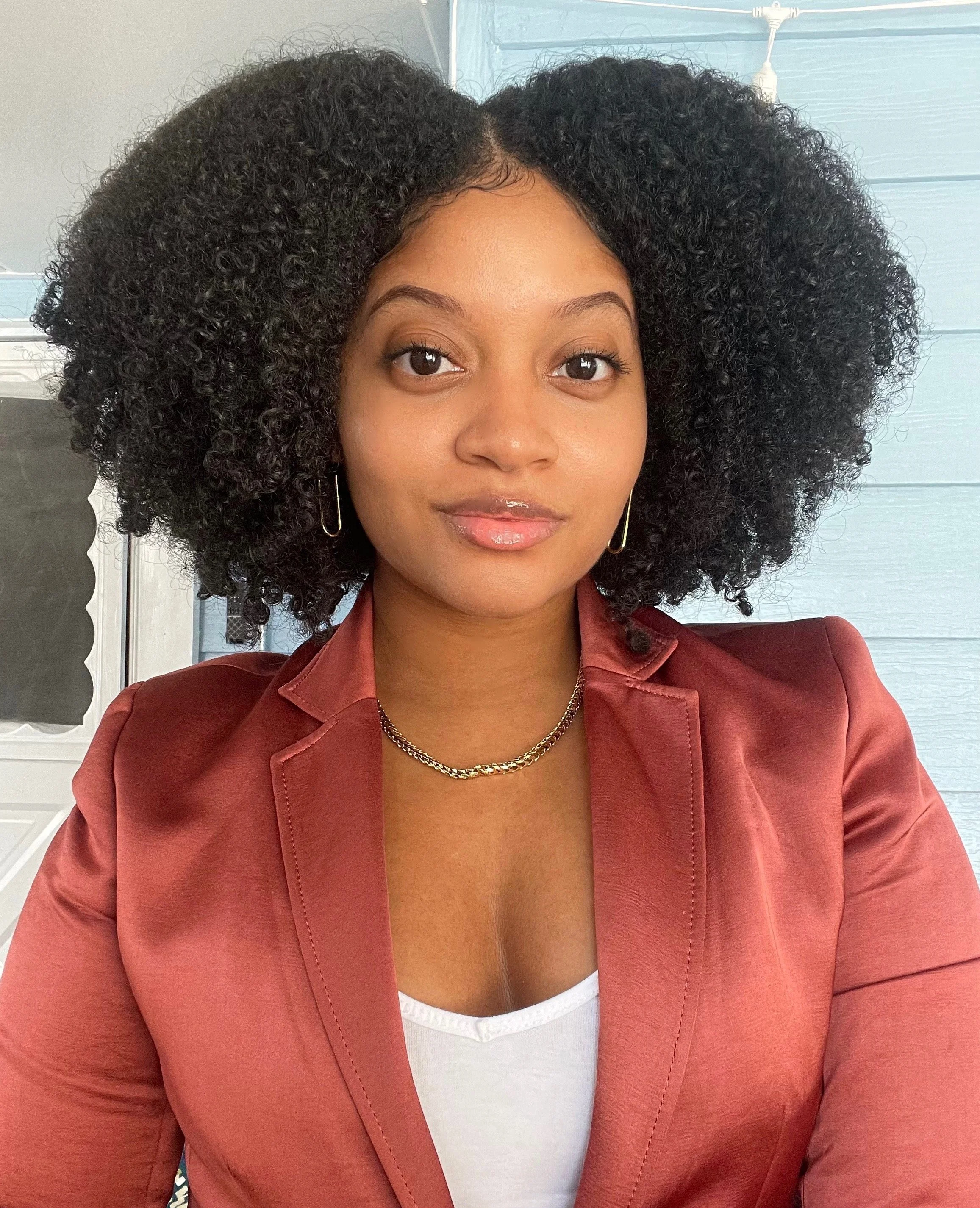
Relationship & Dating Therapist.
I am licensed for therapy in New York. Virtual Only.
As a therapist and dating consultant, I got into this work because I wanted to date differently than the people around me had — and I've spent my career since helping other people do the same. My clients are usually at some kind of turning point: getting back into dating after a long relationship ended, trying to figure out why they keep choosing the same type of partner, or a single mom who's done wasting time on people who aren't serious about building something real.
A lot of what we work on together is pattern recognition — noticing what you're actually attracted to versus what's good for you, learning to spot a red flag in week two instead of month eight, and getting honest about the compromises you've been making without realizing it. This is practical work. We're not just talking about your feelings; we're building a clearer read on people, stronger boundaries, and the confidence to walk away from something that isn't right instead of hoping it improves.
I especially love working with moms navigating dating — because who you choose to bring into your life doesn't just affect you, it affects your kids too. If you're ready to stop settling, start trusting your own judgment, and build a relationship that actually fits the life you're working so hard to create, I'd be glad to help you get there.
You deserve a relationship that fits into your life—not one that requires you to abandon yourself to make it work.
Education
Master of Social Work, Fordham University
Bachelor of Arts in Psychology, Brooklyn College
Credentials
Advanced training in Cognitive Behavioral Therapy (CBT), Attachment-Based Therapy, Person-Centered Therapy, and Dialectical Behavior Therapy (DBT)
Specialized expertise in attachment patterns, boundary-setting, and dating pattern recognition
Extensive experience supporting BIPOC women in building secure, healthy relationships
Particular experience working with single mothers navigating dating and partner selection
Getting Started
The first step is a free connection call. We'll talk about what you're experiencing, what you're looking for in therapy, answer any questions you have, and help determine which therapist may be the best fit for you.
If you decide to move forward, your initial intake session is 60 minutes and is separate from ongoing weekly (or biweekly) therapy sessions, which are 45 minutes.
Understanding Cost & Insurance
We are out-of-network providers, which means we don't bill insurance directly. However, many clients have out-of-network benefits that reimburse a portion of their therapy costs. Reimbursement varies by plan, but our clients typically receive around 50% reimbursement, with some plans reimbursing as little as 30% and others covering up to 100%.
We provide a superbill that you can submit to your insurance company for reimbursement. We also work with Thrizer, which can help simplify the reimbursement process by allowing eligible clients to pay only their portion upfront rather than waiting for reimbursement.
Want to know what your plan covers? [Check Your Out-of-Network Benefits →]
Individual session fees range from $200–$250, depending on the clinician. We also offer a limited number of sliding-scale spots.
We offer virtual therapy throughout New York and New Jersey.
Ready to take the next step? Schedule a free call and let's talk about what you're looking for in therapy.
Therapy For Dating and Relationships FAQs
-
No. Relationship therapy can be incredibly helpful when you're single. You can use therapy to understand your dating patterns, heal from past relationships, explore attachment patterns, establish boundaries, and develop a clearer understanding of what you want in a future relationship.
-
Therapy can help you understand what draws you toward certain relationship dynamics and identify the beliefs, attachment patterns, and experiences that may influence your choices. The goal isn't simply to avoid a particular "type" of person—it's to develop greater awareness of what healthy connection looks and feels like for you.
-
Yes. Many people need support not only processing what happened but also rebuilding self-trust, boundaries, and their sense of identity after a difficult relationship. We can help you understand the relationship's impact and work toward healthier patterns moving forward.
-
You don't have to have an answer before starting therapy. Sometimes therapy is the place where you can slow down, talk through what's happening, and better understand your own feelings, needs, and boundaries.
-
Yes. We can explore the thoughts, attachment patterns, past experiences, and emotional responses that contribute to dating anxiety while helping you develop healthier ways of navigating uncertainty, vulnerability, rejection, and connection.
-
Yes. Dating after trauma can bring up complicated emotions, particularly when previous experiences have affected your sense of safety or trust. Therapy can help you move toward dating from a place of greater self-awareness and choice rather than fear.